
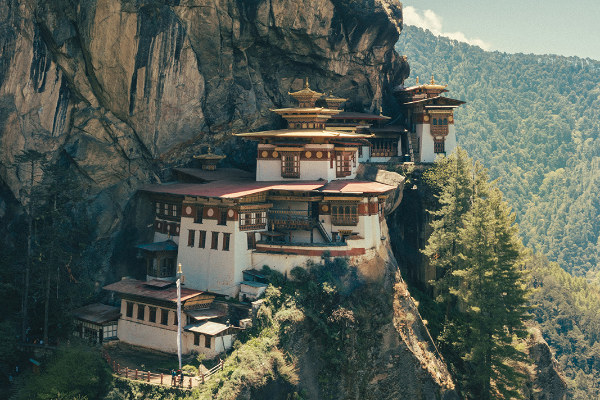
There are destinations that impress you on Instagram.
And then there are destinations that do something rarer — they slow your thoughts down.
Bhutan is that kind of place.
You feel it the moment you cross in: the air feels cleaner, the pace softer, the noise lower. The mountains don’t try to entertain you. They simply exist. And that calm does something powerful — especially to corporate teams that have been running on deadlines, screens, and constant pressure.
This is why Bhutan is quietly becoming a preferred destination for Indian corporate travellers — not as a “trip”, but as a reset.
Bhutan is globally recognised as the world’s only net‑carbon‑negative country — meaning it absorbs more carbon than it emits. But the real story goes far beyond a sustainability headline.
It’s about how a country chose restraint, protected its culture, and treated nature as an asset — not a resource.
What Makes Bhutan Feel Different
Bhutan does not chase tourism numbers. In fact, tourism here is carefully managed to protect culture, environment, and way of life.
This mindset is visible everywhere:
- Traditional architecture is preserved across towns and cities
- Many locals continue to wear national dress in daily life
- Spiritual spaces like monasteries and dzongs are living institutions, not tourist props
For corporate teams, this matters. Bhutan doesn’t distract people with excess. It gives them space to think, reflect, and connect.
How Bhutan Became Net‑Carbon‑Negative
Bhutan’s carbon‑negative status didn’t happen by chance. It is the outcome of long‑term policy decisions that prioritised sustainability over short‑term growth.
1. Forest Protection Written into Law
Bhutan’s Constitution mandates that at least 60% of the country must remain under forest cover permanently. Forests are not viewed as land for development — they are national infrastructure.
2. Clean Hydropower Backbone
Fast‑flowing Himalayan rivers are used to generate renewable hydropower, significantly reducing reliance on fossil fuels.
3. Development Guided by Gross National Happiness
Instead of measuring progress purely through GDP, Bhutan follows the philosophy of Gross National Happiness — focusing on wellbeing, culture, and environmental protection alongside economic development.
Together, these decisions created a system where environmental balance is built into everyday governance.
Why Indian Corporates Are Choosing Bhutan
Indian companies are increasingly selecting Bhutan for leadership offsites and team retreats because of what it enables.
Leadership teams find clarity in its quiet environment. HR teams value the focus on wellbeing and purpose. Companies with ESG commitments see genuine alignment rather than symbolic sustainability.
Bhutan allows offsites to move away from loud luxury toward meaningful experience.
Interesting Facts About Bhutan
- Bhutan legally protects forest cover through its Constitution
- It absorbs more carbon than it produces every year
- Tourism follows a “high value, low impact” approach
- Environmental conservation is tied to national policy, not marketing campaigns
These facts aren’t just impressive — they explain why experiences in Bhutan feel authentic.
What HR and Admin Teams Should Know
Bhutan rewards structured planning. It is not a destination for rushed or last‑minute travel.
HR and Admin teams typically need to account for:
- Entry and compliance requirements
- Sustainability‑linked fees and regulations
- Balanced itineraries that avoid burnout
- End‑to‑end logistical clarity
Having a reliable corporate travel partner ensures that the experience remains seamless rather than complex.
Final Thought Bhutan’s appeal to Indian corporate travellers reflects a larger shift in how companies view travel.
The future of corporate offsites isn’t louder destinations or tighter schedules. It’s clarity, wellbeing, and intent.
Bhutan offers that — quietly.
Planning a leadership offsite or corporate retreat with purpose at its core? Offistrip helps HR and Admin teams design and manage end‑to‑end corporate travel and offsites with clarity, control, and care.